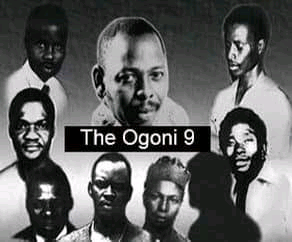
The story of the Ogoni 9 and the Ogoni 4 remains one of the most painful and defining moments in Nigeria’s human rights history. These two groups of men stood up against injustice, environmental destruction, and oppression in the Niger Delta. Their deaths in the 1990s and early 2000s shook the world and brought global attention to the plight of the Ogoni people, a minority ethnic group in Rivers State, Nigeria.
Who Are the Ogoni People?
The Ogoni people live in the oil-rich Niger Delta region. For decades, their land was a major source of crude oil for Nigeria, especially through Shell Petroleum Development Company. However, while oil brought wealth to the nation, it brought pollution and hardship to Ogoniland, destroying farmlands, rivers, and livelihoods.
By the early 1990s, frustration had grown among the Ogoni community. Their land was being exploited, their air and water poisoned, and their voices ignored. It was in this climate that the Movement for the Survival of the Ogoni People (MOSOP) emerged.
The Rise of Ken Saro-Wiwa and the Ogoni 9
Ken Saro-Wiwa, a writer, television producer, and environmental activist, became the face of MOSOP. He and his fellow activists, later known as the Ogoni 9, launched a peaceful campaign against environmental degradation and demanded fair treatment for the Ogoni people.
The group included:
1. Ken Saro-Wiwa
2. Dr. Barinem Kiobel
3. Saturday Dobee
4. Felix Nuate
5. Baribor Bera
6. John Kpuinen
7. Paul Levura
8. Nordu Eawo
9. Daniel Gbokoo
They accused both the Nigerian government and Shell of environmental neglect and human rights abuses. Their campaign called for a share of oil revenues and an end to pollution in Ogoniland.
The 1995 Executions
In 1994, tensions exploded when four Ogoni chiefs were murdered during a local crisis. The government accused Ken Saro-Wiwa and his supporters of instigating the killings, even though there was no clear evidence.
A special military tribunal, widely criticized for being unfair, was set up under General Sani Abacha’s regime. Despite international pleas for clemency, including appeals from the United Nations and the Commonwealth, the nine men were sentenced to death.
On November 10, 1995, the Ogoni 9 were executed by hanging. Their deaths caused global outrage. Nigeria was suspended from the Commonwealth, and Shell faced heavy criticism for its alleged role in the events leading to the executions.
The Ogoni 4
A few years later, four other prominent Ogoni activists, often referred to as the Ogoni 4, also lost their lives in connection with the same struggle. They included leaders and elders who continued to advocate for the rights of their people after the 1995 tragedy.
While the exact circumstances around their deaths were different, they shared a common fate: being silenced for speaking truth to power. Together, the Ogoni 9 and Ogoni 4 became lasting symbols of resistance against oppression and environmental injustice.
The deaths of the Ogoni 9 and Ogoni 4 changed the global conversation on environmental rights. Their sacrifice brought international attention to the link between human rights and environmental protection.
In 2009, Shell agreed to a $15.5 million out-of-court settlement in the United States with the families of the Ogoni 9. Though the company denied wrongdoing, the case highlighted the need for corporate accountability in developing nations.
The United Nations Environment Programme (UNEP) later conducted an environmental assessment of Ogoniland, confirming decades of pollution and recommending a long-term clean-up, a process that is still ongoing today.
In 2025, President Bola Ahmed Tinubu officially granted state pardon to the Ogoni 9 and Ogoni 4, posthumously restoring their national honor. The decision was welcomed as a symbolic act of reconciliation and justice for a people who had long been marginalized.
Conclusion
The story of the Ogoni 9 and Ogoni 4 is more than a tragic tale, it is a reminder of the power of courage and the price of justice. Their voices continue to echo through the Niger Delta and across the world, urging leaders to protect both people and the environment.