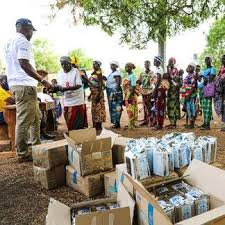
Germany Strengthens Its Commitment to UNICEF WFP’s Multi-Sector Resilience Programme Aimed at Rebuilding and Supporting Vulnerable Communities in Borno and Yobe States
The German government has reaffirmed its commitment to rebuilding lives and promoting resilience in Northeast Nigeria with the launch of the second phase of a joint UNICEF WFP initiative designed to support communities hardest hit by conflict and climate challenges.
Through a fresh €20 million grant provided by the German Federal Ministry for Economic Cooperation and Development (BMZ), via KfW Development Bank, this expanded initiative aims to build on the notable successes of its first phase — which reached over 150,000 vulnerable individuals, including young children, pregnant and breastfeeding women, out-of-school children, and families facing severe food insecurity.
This second phase will significantly scale up access to vital services, bolster food security, and strengthen peacebuilding efforts, targeting over 200,000 people. The project’s reach will also extend geographically, incorporating four additional local government areas: Bama and Konduga in Borno State, as well as Potiskum and Jakusko in Yobe State.
Years of insurgency and instability in Northeast Nigeria have left communities shattered, livelihoods destroyed, and women and children especially vulnerable. The crisis has been made worse by extreme climate conditions, which continue to displace families, damage farmland, and deepen food insecurity and malnutrition.
UNICEF WFP . To tackle these intertwined challenges, the second phase of the resilience programme will deliver a broad range of essential services. These include child protection initiatives, clean water access, nutrition improvement programmes, vocational training for young people out of school, conditional cash transfers, peace clubs in schools, support for smallholder farmers, and environmental restoration activities.
ALSO READ : Ekiti State Empowers Schools With N1.2bn Grants
David Stevenson, WFP Country Director in Nigeria, emphasized the programme’s impact:
“Food insecurity remains a persistent threat in Northeast Nigeria, made worse by climate change and rising economic pressures. With Germany’s continued support, this programme is helping to rebuild food systems and improve nutrition outcomes. This new phase will deepen that impact.”
Cristian Munduate, UNICEF WFP Nigeria Representative, also highlighted the project’s significance:
UNICEF WFP. Northeast Nigeria remains one of the toughest environments for children and women. That’s why this initiative is so important. The first phase has already improved lives, and with this renewed backing, we’ll extend our reach and services to even more communities in need.”
Dr. Karin Jansen, Head of Development Cooperation at the German Embassy in Abuja, reiterated Germany’s long-standing support for community-led recovery efforts:
“Working closely with reliable partners like UNICEF and WFP allows us to promote locally driven resilience against conflict and climate risks. This is especially critical for safeguarding the well-being of women and children.”
Since its inception, the programme has delivered significant milestones:
Over 60 solar-powered boreholes and 18 hand pumps have been constructed or rehabilitated, delivering clean water to nearly 300,000 people.
Close to 40,000 out-of-school children have returned to classrooms through formal and informal education centres.
More than 6,000 smallholder farmers have accessed drought-resistant seeds and solar irrigation systems, resulting in better harvests, improved nutrition, and increased incomes.
Stakeholders believe this UNICEF WFP partnership serves as a successful model for humanitarian-development collaboration and could help shift the region from prolonged crisis toward sustainable recovery and self-reliance.
With continued investment and strong partnerships, the programme aims to create a resilient, inclusive, and hopeful future for thousands of families across Northeast Nigeria.